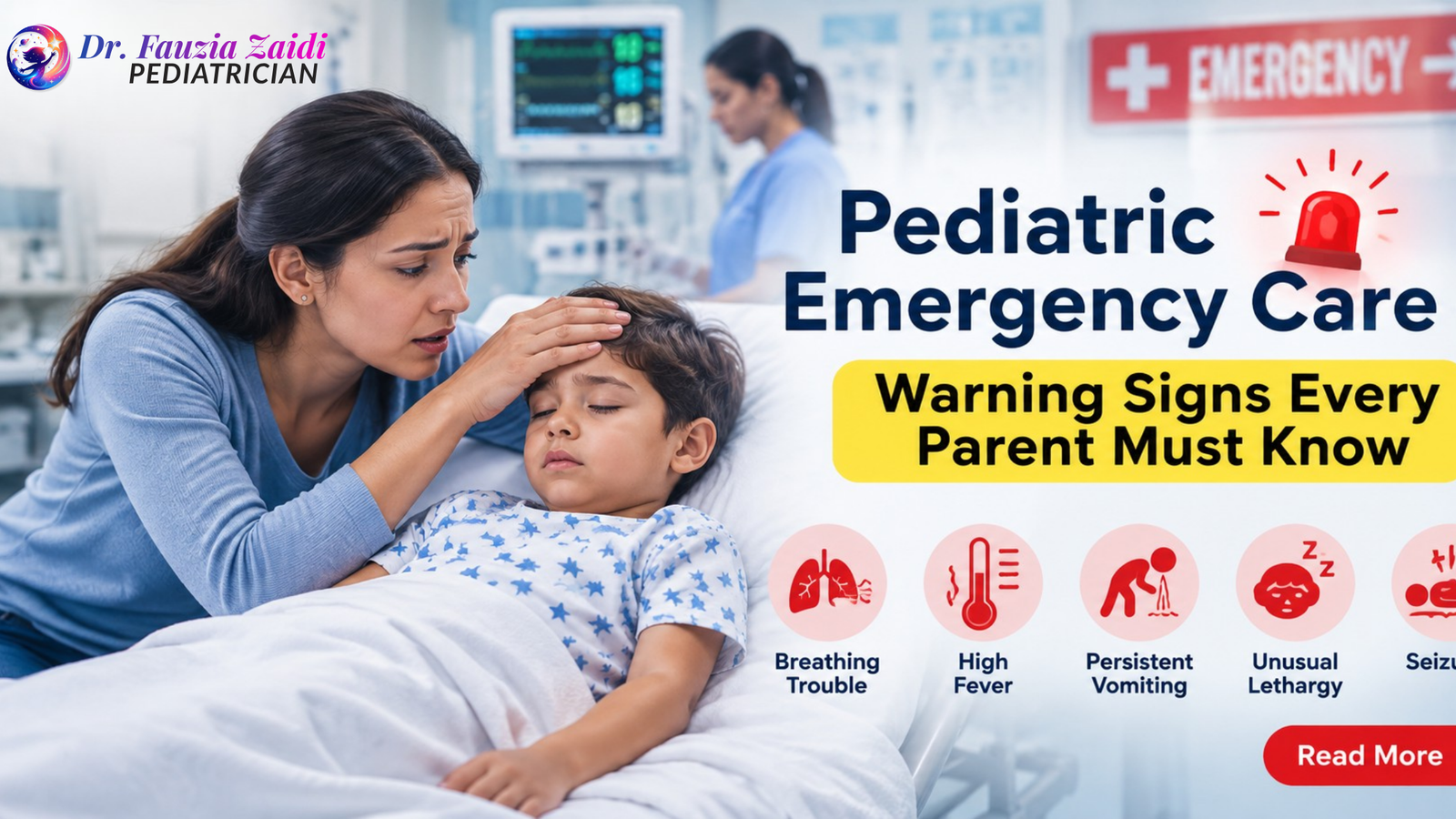







Pediatric Emergency Care – Warning Signs Every Parent Must Know
Introduction
Children can become unwell quickly, and it is not always easy for parents to determine whether a symptom can be monitored at home or requires urgent medical attention. Fever, vomiting, cough, minor injuries, and stomach discomfort are common during childhood, but certain warning signs can indicate a potentially serious condition.
Recognizing these signs early can help parents make timely decisions and seek appropriate medical care. This is especially important for babies and young children who may not be able to clearly explain what they are experiencing.
Parents should know their child's usual behavior and pay attention to sudden or significant changes. For persistent symptoms or concerns about a child's health, consultation with the Best Pediatrician in Noida can help determine the appropriate next steps. However, severe or life-threatening symptoms require immediate emergency medical care.
What Is a Pediatric Emergency?
A pediatric emergency is a health problem or injury that requires immediate medical assessment or treatment to prevent serious complications.
Some emergencies are obvious, such as a major injury or severe breathing difficulty. Others can initially appear less serious. For example, unusual sleepiness, dehydration, or a rapidly worsening infection may require urgent evaluation.
A parent's observation can be extremely valuable. If a child looks significantly different from usual, becomes difficult to wake, struggles to breathe, or deteriorates rapidly, urgent medical attention should be sought.
1. Difficulty Breathing
Breathing difficulty is one of the most important warning signs parents should recognize.
Seek urgent medical attention if a child has:
- Severe difficulty breathing
- Very rapid or labored breathing
- Persistent wheezing with distress
- Skin pulling in around the ribs while breathing
- Difficulty speaking or crying because of breathlessness
- Bluish or gray lips, tongue, or skin
- Unusual pauses in breathing
Breathing problems can occur with respiratory infections, asthma, allergic reactions, choking, or other medical conditions.
A child who is struggling to breathe should not be kept at home waiting for symptoms to improve.
2. High or Concerning Fever
Fever is common in children and is often associated with infections. The temperature alone, however, does not always indicate how serious an illness is.
Parents should consider the child's age, behavior, hydration, breathing, and other symptoms.
Fever requires particular attention in very young infants. Parents should seek prompt medical guidance for fever in babies, especially during the first few months of life.
Urgent evaluation may also be needed when fever occurs with:
- Severe lethargy
- Difficulty breathing
- Stiff neck
- Seizure
- Persistent vomiting
- Unusual rash
- Severe headache
- Confusion or difficulty waking
If parents are uncertain about the severity or persistence of a child's fever, the Best Pediatrician in Noida can assess associated symptoms and recommend appropriate care.
3. Severe Dehydration
Children can become dehydrated after repeated vomiting, diarrhea, fever, or inadequate fluid intake.
Babies and younger children may become dehydrated more quickly than adults.
Possible warning signs include:
- Very dry mouth
- Reduced urination
- Few or no tears when crying
- Sunken-looking eyes
- Unusual tiredness or weakness
- Difficulty drinking or keeping fluids down
- Marked irritability
- Unusual sleepiness
Infants may also have fewer wet diapers than usual.
Persistent vomiting or diarrhea accompanied by signs of dehydration requires medical attention.
4. Seizures
A seizure can be frightening for parents. During a seizure, a child may develop sudden stiffening, repeated jerking movements, unusual eye movements, loss of awareness, or reduced responsiveness.
If a child is having a seizure:
- Keep the child away from dangerous objects.
- Place them on their side when safely possible.
- Do not put anything in their mouth.
- Do not try to forcibly stop their movements.
- Note how long the seizure lasts.
- Seek appropriate emergency medical care.
A first seizure, prolonged seizure, repeated seizures, breathing difficulty, serious injury during a seizure, or failure to recover normally afterward requires urgent medical evaluation.
5. Severe Allergic Reaction
A severe allergic reaction, known as anaphylaxis, can develop rapidly after exposure to certain foods, medicines, insect stings, or other allergens.
Emergency warning signs may include:
- Difficulty breathing
- Swelling of the tongue or throat
- Widespread hives with other symptoms
- Severe wheezing
- Repeated vomiting with an allergic reaction
- Dizziness or fainting
- Sudden weakness or collapse
If the child has a prescribed emergency allergy action plan or epinephrine auto-injector, parents and caregivers should follow the instructions provided by their healthcare professional and seek emergency medical assistance.
6. Choking
Young children may accidentally swallow food, coins, toy parts, batteries, or other small objects.
Choking should be suspected if a child suddenly cannot breathe, speak, cry, or cough effectively.
Complete airway obstruction is a medical emergency. Parents and caregivers should learn age-appropriate first-aid techniques for choking from a certified training provider.
Even after an object appears to have been removed, medical evaluation may sometimes be required, particularly if breathing problems, coughing, or other symptoms continue.
Button battery ingestion is particularly dangerous and requires immediate emergency evaluation, even if the child initially appears well.
7. Head Injuries
Children frequently experience minor bumps while playing, but some head injuries require urgent assessment.
Seek medical attention if a head injury is followed by:
- Loss of consciousness
- Repeated vomiting
- Seizure
- Increasing confusion
- Severe or worsening headache
- Difficulty walking
- Unusual behavior
- Extreme sleepiness or difficulty waking
- Weakness in an arm or leg
Parents should also seek urgent care after a significant fall or high-impact injury.
8. Persistent Vomiting or Severe Abdominal Pain
Occasional vomiting can occur with common childhood illnesses, but persistent vomiting can lead to dehydration and may sometimes indicate a more serious condition.
Seek medical evaluation if vomiting is frequent, the child cannot keep fluids down, there are signs of dehydration, or vomiting occurs with severe abdominal pain.
Severe or worsening abdominal pain, a swollen abdomen, unusual drowsiness, or blood in vomit or stool should also be evaluated urgently.
Parents concerned about recurring digestive symptoms can consult the Best Pediatrician in Noida for evaluation and guidance.
9. Poisoning or Accidental Medicine Ingestion
Medicines, household cleaners, chemicals, pesticides, and other potentially harmful substances should always be stored securely and out of children's reach.
If poisoning or accidental medicine ingestion is suspected, do not wait for symptoms to develop. Seek immediate professional medical or poison-control guidance.
Do not make the child vomit unless specifically instructed by a qualified healthcare professional.
If possible, keep the product container or medicine packaging available so healthcare professionals can identify the substance involved.
10. Unusual Drowsiness or Unresponsiveness
Children often sleep more when they are ill, but extreme lethargy is different from ordinary tiredness.
Emergency evaluation may be necessary if a child:
- Is extremely difficult to wake
- Does not respond normally
- Appears confused
- Suddenly becomes unusually weak
- Cannot maintain normal interaction
- Loses consciousness
These symptoms can occur with serious infections, head injuries, poisoning, seizures, low blood sugar, or other conditions requiring urgent assessment.
How Parents Can Prepare for Pediatric Emergencies
Being prepared can help parents respond more effectively during stressful situations.
Parents and caregivers should consider:
- Learning pediatric first aid and CPR from a recognized provider
- Keeping emergency numbers easily accessible
- Maintaining an updated list of the child's medicines and allergies
- Storing medicines and chemicals safely
- Keeping age-appropriate first-aid supplies at home
- Informing caregivers about important medical conditions
- Knowing the location of an appropriate nearby emergency facility
Regular health check-ups with the Best Pediatrician in Noida also provide an opportunity to discuss a child's medical history, allergies, chronic conditions, medications, and individualized emergency plans.
When Should You Go to the Emergency Department?
Seek immediate emergency medical care if a child has severe breathing difficulty, becomes unresponsive, develops bluish or gray skin, experiences a prolonged or serious seizure, has a severe allergic reaction, suffers a major injury, has suspected poisoning, or shows other rapidly worsening symptoms.
Parents should not delay emergency treatment while trying multiple home remedies.
When symptoms are less severe but persistent or concerning, contact a healthcare professional for advice.
Conclusion
Recognizing pediatric emergency warning signs can help parents respond quickly when a child becomes seriously ill or injured. Breathing difficulty, severe dehydration, seizures, anaphylaxis, choking, significant head injuries, poisoning, unusual unresponsiveness, and rapidly worsening illness require particular attention.
Preparation is equally important. Learning pediatric first aid, safely storing medicines and chemicals, keeping medical information accessible, and understanding your child's health conditions can make emergencies easier to manage.
When a child's condition appears serious or is rapidly worsening, seek emergency medical care without delay.
Frequently Asked Questions (FAQs)
1. When is a child's breathing problem an emergency?
Severe breathlessness, bluish or gray lips, pauses in breathing, or significant difficulty speaking or crying requires immediate medical attention.
2. Is every fever in children an emergency?
No. However, fever in very young infants or fever accompanied by severe symptoms requires prompt medical assessment.
3. What should parents do during a seizure?
Keep the child safe, place them on their side when possible, never put anything in their mouth, and seek medical help when indicated.
4. What are common signs of dehydration?
Reduced urination, dry mouth, few tears, unusual sleepiness, weakness, and difficulty drinking can indicate dehydration.
5. When should a child go to an emergency department?
Seek emergency care for severe breathing problems, unresponsiveness, major injuries, serious seizures, severe allergic reactions, poisoning, choking, or rapidly worsening symptoms.
.png)